
Vanilla dominates 2020s perfumery, but will gourmand fragrances face a backlash as noses tire of all this sweetness?
If someone asked me in 2026 to bottle the entire smell of this decade so far, I wouldn’t even need to think: vanilla. It’s everywhere—swirling in body mists, baked into luxury perfumes, tucked inside shampoo, and even glossing over hair oils. Walk into any Sephora and the air itself seems edible. The 2020s have officially become the era of gourmand domination, and frankly, my nose is exhausted.
The ‘90s had their crisp, unisex aquatic splashes. The 2000s glittered with loud white florals like Juicy Couture and Britney Spears’ Curious, plus those punchy tropical Escada juices and the heady spell of Tom Ford’s Black Orchid. Then the 2010s went deep on oud and sandalwood. But the 2020s? Cake. Pastry. Caramel-drizzled everything. It feels like every new launch is trying to smell like a bakery, and while I appreciate a good cupcake moment, I don’t want my perfume wardrobe to be a dessert cart.
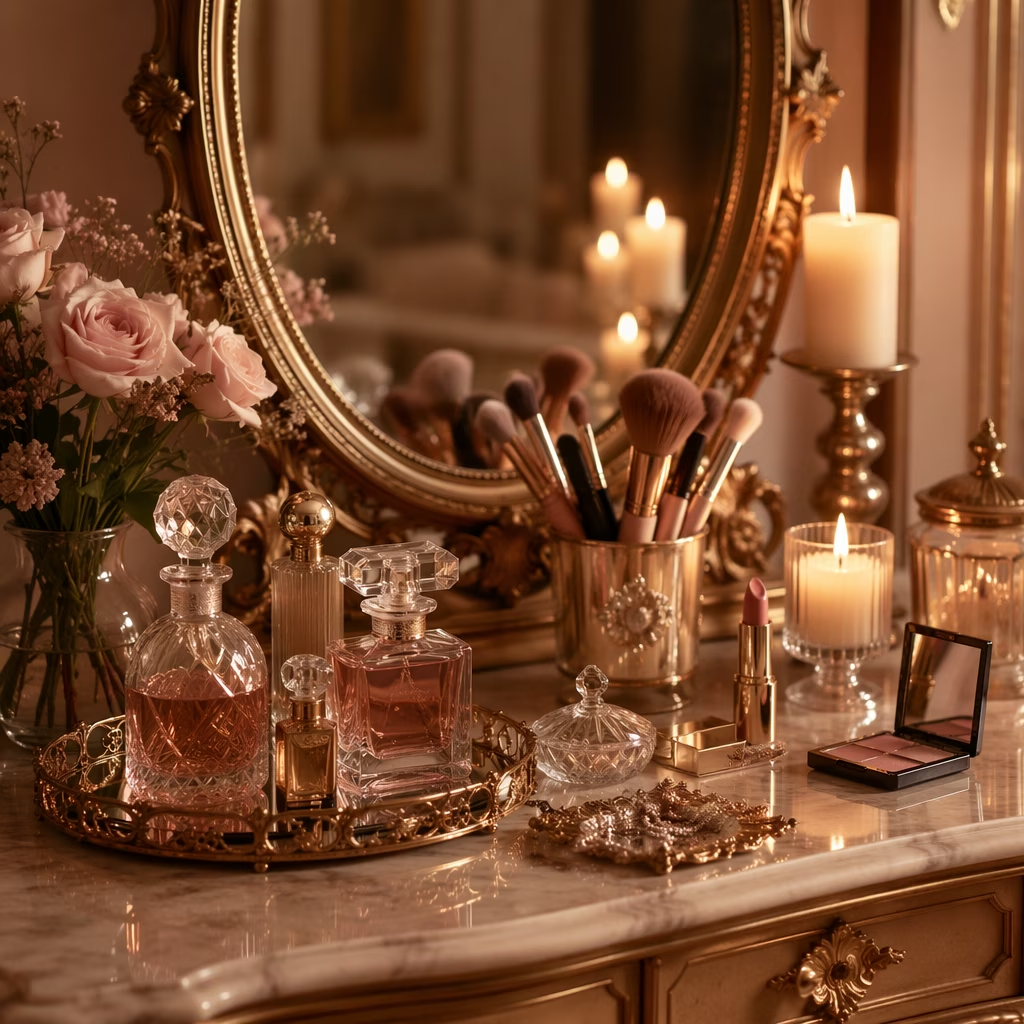
Scroll through the bestseller list at any major beauty retailer. Gourmands dominate. On TikTok, creators inhale bottles like they’re fresh-baked cookies, raving about “lickable” vanilla and “yummy” pistachio gelato accords. The phenomenon has swallowed body care and hair care whole—everything is scented to be consumed. And sure, everyone smells good enough to eat… but I’ve started feeling a little queasy from all the sugar.
Maybe it’s just me. Here we are, well past the halfway mark of this decade, and these scents show zero signs of slowing down. Autumne West, national beauty director at Nordstrom, put it perfectly: “Gourmand fragrances tend to evoke warmth, comfort, and nostalgia—they remind people of familiar, feel-good experiences. They’re generally sweet, approachable, and easy to understand, which makes them universally appealing.” That totally makes sense. After the pandemic years and the relentless churn of bad news, who wouldn’t want to wrap themselves in a cozy vanilla blanket? Fragrance became a small grounding ritual, a way to self-soothe when the world felt chaotic. Gourmands delivered immediate, uncomplicated pleasure.
Yet something in me is craving a shake-up. I keep wondering: will a vanilla backlash ever arrive, or will this ingredient reign well into the 2030s? Let’s rewind a bit to understand how we got here—and maybe guess where we’re headed next.
Vanilla itself isn’t new to perfumery. Rose and jasmine have it beat, but vanilla has been a quiet architect in perfume pyramids for ages. The first real milestone came in 1889 with Guerlain’s Jicky, a strikingly modern blend of vanilla, lavender, and citrus that still feels fresh today. Later, Guerlain doubled down with Shalimar, and to celebrate its 100th birthday, they’ve just released L’Essence Eau de Parfum with what they call an “overdose of vanilla.” But the gourmand tidal wave as we know it truly began in 1992 with Mugler Angel. That bombastic mix of cotton candy, berries, caramel, chocolate, and vanilla crashed through the doors and made smelling like a carnival a legitimate art form. It paved the way for drugstore darlings like Coty Vanilla Fields (1993), the spun-sugar cloud of Aquolina’s Pink Sugar, and Prada’s sticky-sweet Candy.
Zoom forward to the 2020s, and vanilla has become the undisputed queen. Viral darlings like Sol de Janeiro’s Brazilian Bum Bum Cream, Kayali’s delicious Vanilla 28 and Yum Pistachio Gelato 33, and Burberry Goddess (vanilla meets herbal lavender) turned gourmands into a full-blown cultural movement. Then there’s the reigning money-maker: Maison Francis Kurkdjian’s Baccarat Rouge 540. That airy, candy-coated cloud of saffron, ambergris, sugar, and ambroxan sent the collective sweet tooth into overdrive. Suddenly, you couldn’t walk into a room without getting hit by some airy, burnt-sugar trail. Vanilla spawned endless flankers: Vanilla Skin, Vanilla Sex, Plush Vanilla, Mod Vanilla, Vanilla Velvet, Vanilla Era, Vanilla Sky… the list reads like a naming algorithm gone deliciously mad.
And honestly, I loved it—for a while. These scents are well-crafted, joyfully easy to wear, and democratize perfume in a way that feels inclusive rather than intimidating. But overexposure is real. Remember when Santal 33 became the avocado toast of fragrance? I’m starting to feel the same heavy sigh every time another caramel-vanilla cloud wafts past. Even the most beautiful dessert loses its magic if you’re forced to eat it for every meal.
The good news? Evolution is happening. According to West, Nordstrom customers now gravitate toward “sweet yet balanced with something fresh or spicy.” The syrupy one-noters of the early 2020s are slowly giving way to scents that pair vanilla with green fig, smoky tea, or peppery woods. People are getting curious about niche brands, limited editions, and layerable options like hair mists. Some top picks right now include Yves Saint Laurent Libre Vanille Couture, which anchors vanilla with lavender and orange blossom; Fugazzi Vanilla Haze, a gauzy gauze of vanilla and musk; and Boy Smells Coco Cream, which folds coconut into a surprisingly sophisticated skin scent.
Tanya Gonzalez, co-founder of Eauso Vert, predicts a shift toward “deeper, moodier profiles”—ouds, dark edibles, and sensual textures. “It’s less about being fluffy or overtly sweet and more about richness, intimacy, and depth.” Meanwhile, Phway Su Aye from Gabar hopes to see more daringness and originality, even within gourmands, breaking the mold with unexpected ingredients. Susan Wai Hnin of Gabar suggests looking to beverage notes like milk, coffee, and tea for comfort without sugar shock. She also nudges us beyond traditionally Western gourmand notes—think sesame, condensed milk, date, molasses, and tonka bean, as featured in Gabar’s Balu perfume. These still offer warmth and familiarity, but with a toasty, nutty complexity that feels more adult than a frosted cupcake.
As for me, I’ve taken a sharp left turn. I’ve re-embraced the big, dramatic white florals that once felt too glamorous for my everyday life. DS & Durga’s Durga is a creamy, enchanted garden of tuberose and ylang; Frederic Malle’s Carnal Flower remains the ultimate icy, green tuberose masterpiece; and Aerin’s Tuberose Gardenia wraps me in ladylike elegance without a single grain of sugar. I may not want to smell like a baked good anymore, but there’s nothing wrong with smelling delicious. I just want that deliciousness to feel like a lush bouquet, not a bakery counter.
Where will we be by 2030? If trends move the way I suspect, we’ll see a resurgent love for sparkling aquatic florals—perhaps a reboot of Clinique Happy’s sunny optimism—and a new wave of romantic, petal-heavy roses. Deep ouds will stage a comeback, and those moody edible notes Gonzalez mentions (roasted rice, sesame, cardamom) will weave into skin scents that are warm but not sweet. One thing is certain: perfume will always be a reflection of our collective moods. And right now, my mood is saying: less frosting, more flowers.